
October 6, 2026
Short answer: When a client fixates on the rate, the deal isn’t dead — the conversation is just stuck on the wrong number. The loan officers who keep deals moving reframe around five things: the monthly payment (not the rate), the cost of waiting vs. buying now, using equity strategically, payment solutions like seller credits and buydowns, and the client’s actual goals and timing. This playbook is the overview; each tactic gets its own deep dive over the coming weeks.
Why the “rate” objection is really a different objection
When a client says “I’ll wait until rates come down,” they’re rarely making a precise financial calculation. They’re expressing uncertainty — about the payment, about timing, about whether now is the right move. The rate is just the easiest thing to point at. Your job isn’t to argue the rate; it’s to surface the real question underneath and answer that one. Most of the time the real question is “can I comfortably afford this, and is now the right time?”
That’s good news, because those are questions you can actually address with structure, options, and a clear plan — even in a higher-rate environment. The best loan officers treat the rate objection as the start of a consultation, not the end of one. For more on positioning yourself as that trusted advisor, see how to become the go-to lending partner.
The five ways to reframe the conversation
Here’s the playbook at a glance. Each row is a move you can make the moment a client gets stuck on rate.
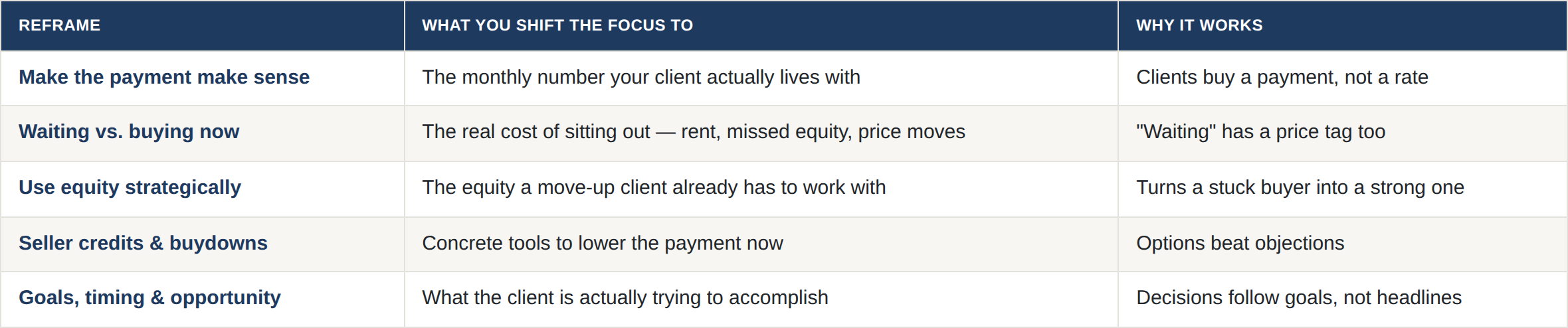
How to use this playbook
You won’t need all five in every conversation. Read where the client is stuck and reach for the right one. A first-time buyer worried about the monthly number needs the payment reframe. A move-up client with a house to sell needs the equity conversation and a way to make a strong, non-contingent offer — which is exactly where a tool like the Knock Bridge Loan™ comes in. A client who “just wants to wait” needs the cost-of-waiting math and a reminder they can always refinance later.
The throughline is this: you’re moving the client off a single number they can’t control (the rate) and onto the things they can — the payment, the timing, the structure of the deal, and the goal they’re trying to reach. For a head start on preparing clients to act, see four ways to prepare clients to buy and the deals that win.
Frequently asked questions
Should I ever just talk about the rate directly? Yes — acknowledge it honestly, then pivot. Dismissing the rate makes clients feel unheard. Validate the concern, then move the conversation to the payment and the plan, which is where you can actually help.
What if rates really might drop soon? Then the “date the rate” framing is your friend: the client buys the home now and refinances if and when rates improve. Waiting risks higher prices and more competition; buying now with a plan to refinance keeps options open.
Is this just for move-up buyers? No. The payment, buydown, and goals reframes work for any client. The equity-strategy piece is specifically powerful for move-up and buy-before-you-sell clients.
Where do I start with a stuck client? Ask what monthly payment feels comfortable, then work backward. You’ll almost always learn the real objection faster than by debating the rate.
Over the next few weeks this series breaks down each tactic with scripts and examples. Want to see how Knock helps you turn stuck clients into closings? Explore Knock for loan officers.